
Brandon's Semiconductor Simulator
Brandon's Semiconductor Simulator is out now on PC, released on July 11, 2026.
About Brandon's Semiconductor Simulator
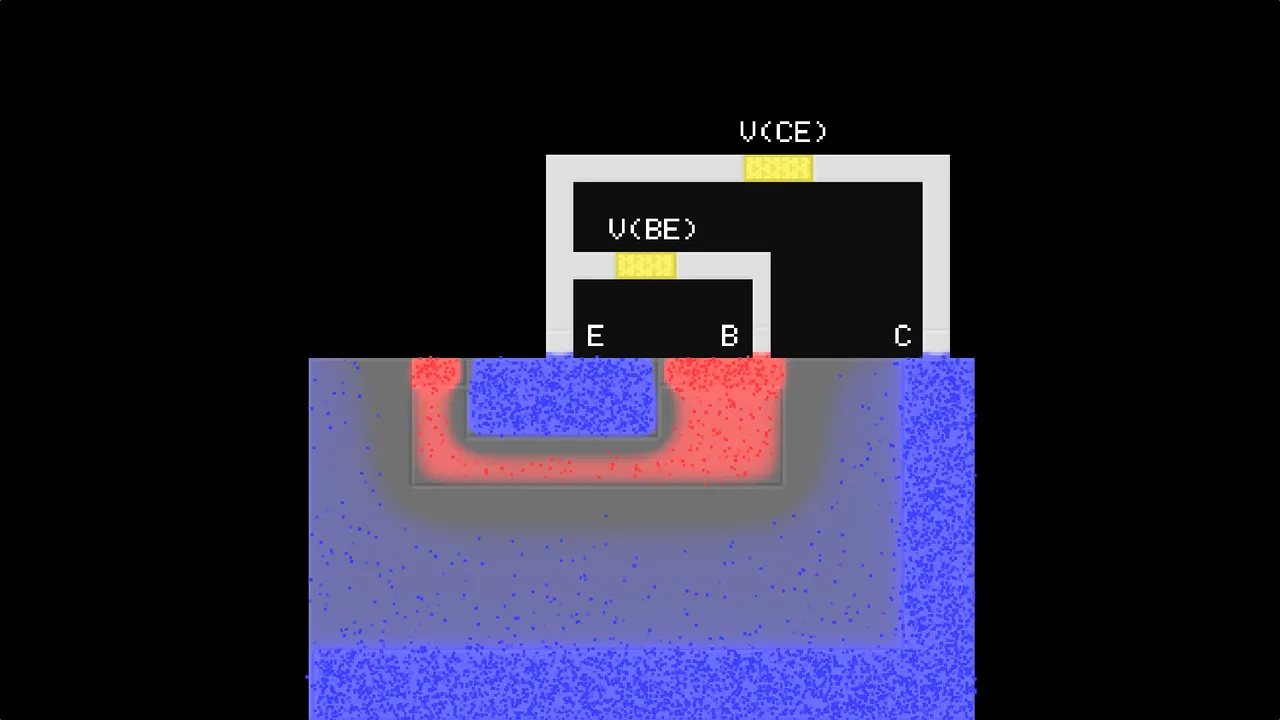
Moving beyond the abstract diagrams of most educational software, Brandon's Semiconductor Simulator attempts to bridge the gap between high-level physics theory and hands-on circuit design. The Brandon's Semiconductor Simulator release date is currently set for July 11, 2026, where it will launch exclusively for PC. Developed by Brandon Li, the project functions as a specialized laboratory for the visualization of electromagnetism and charge carrier behavior within solid-state electronics.
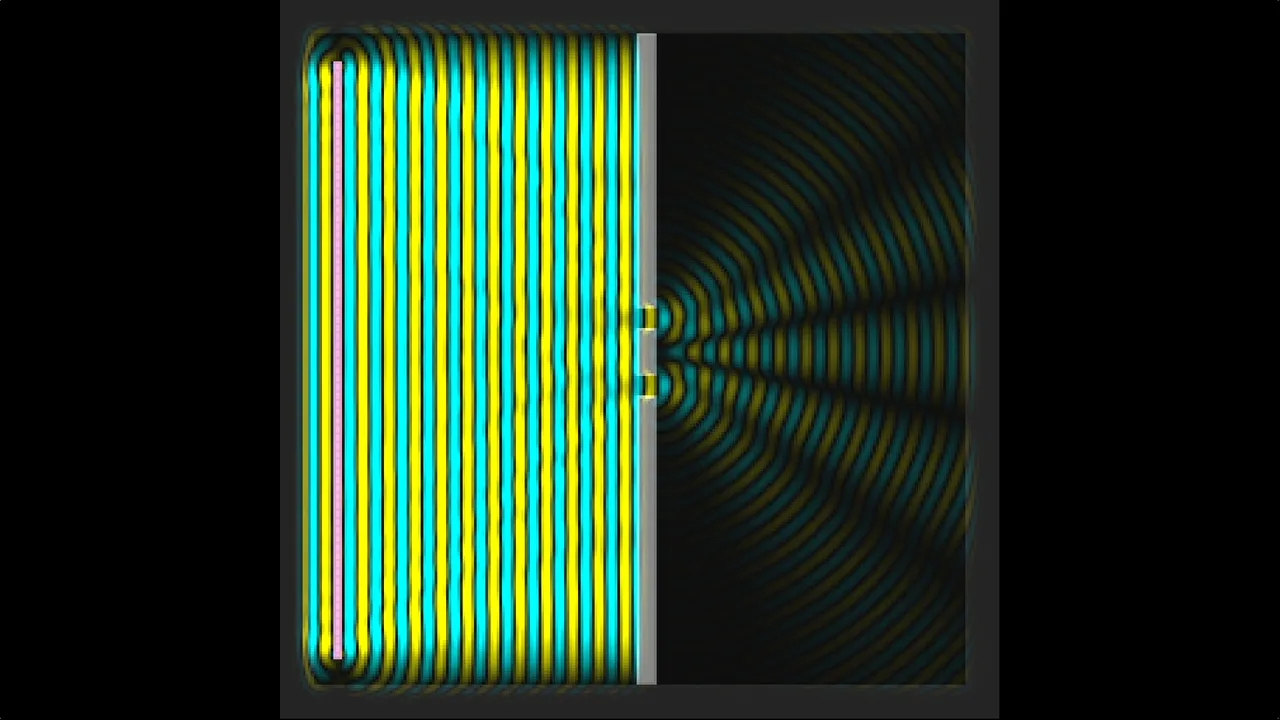
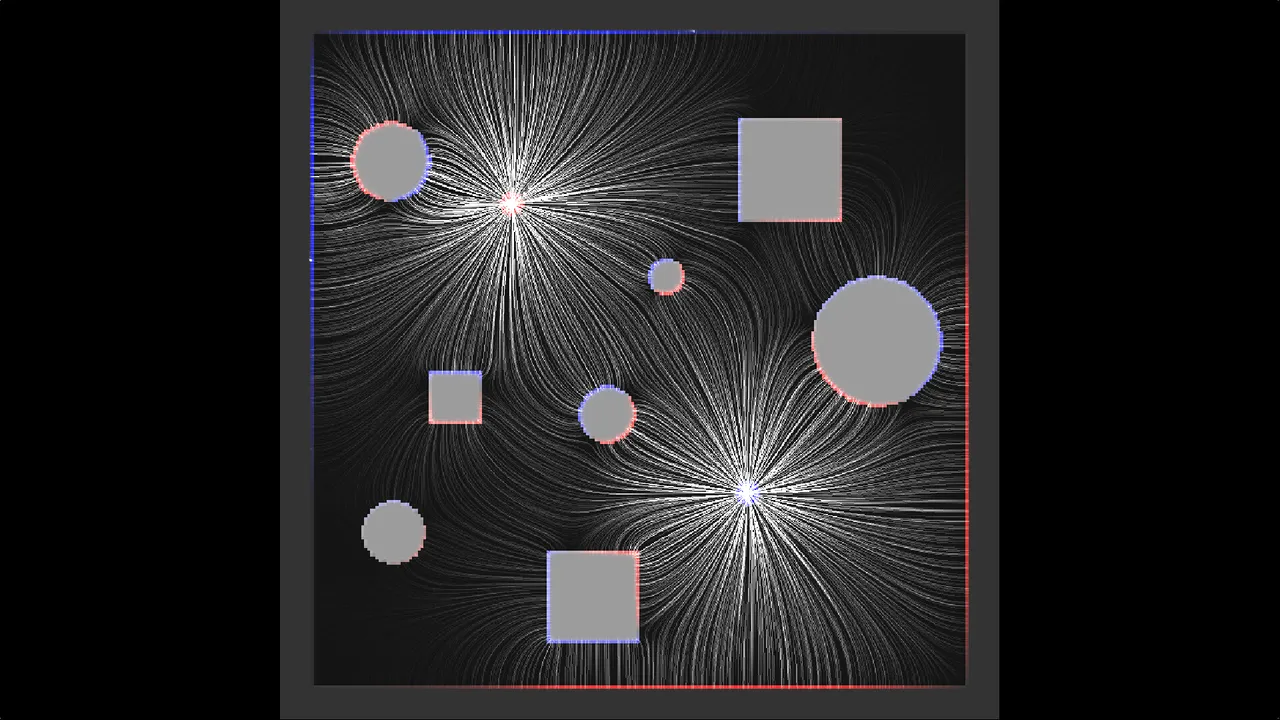
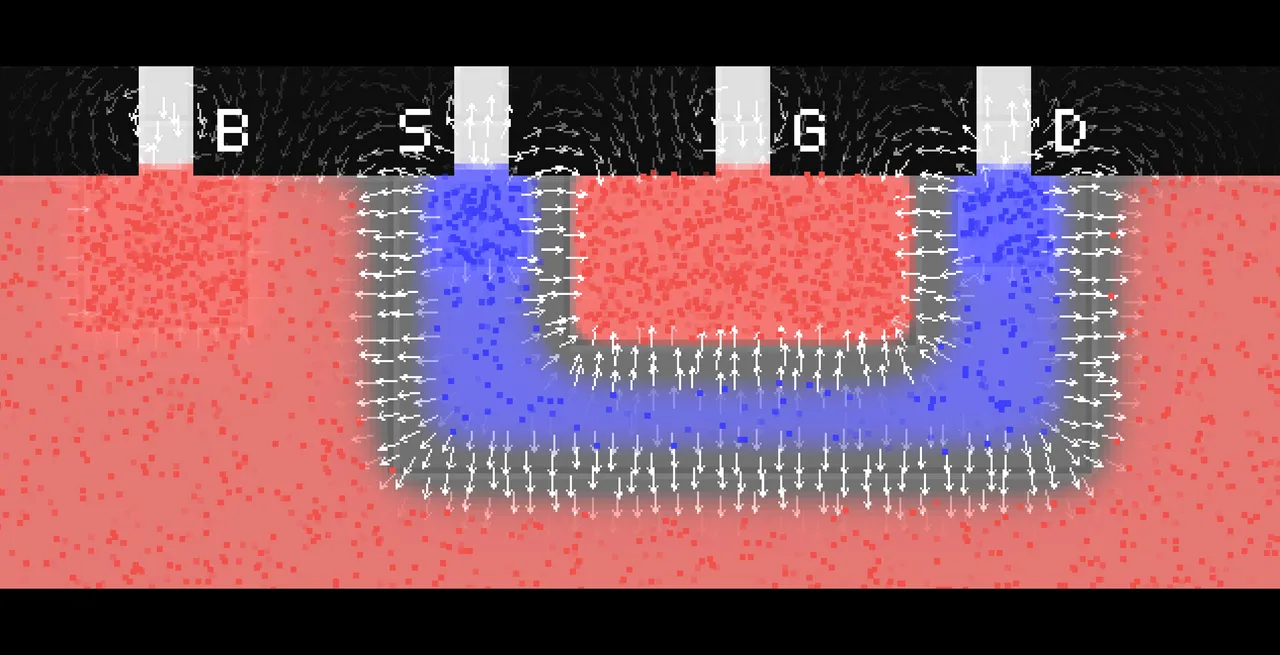
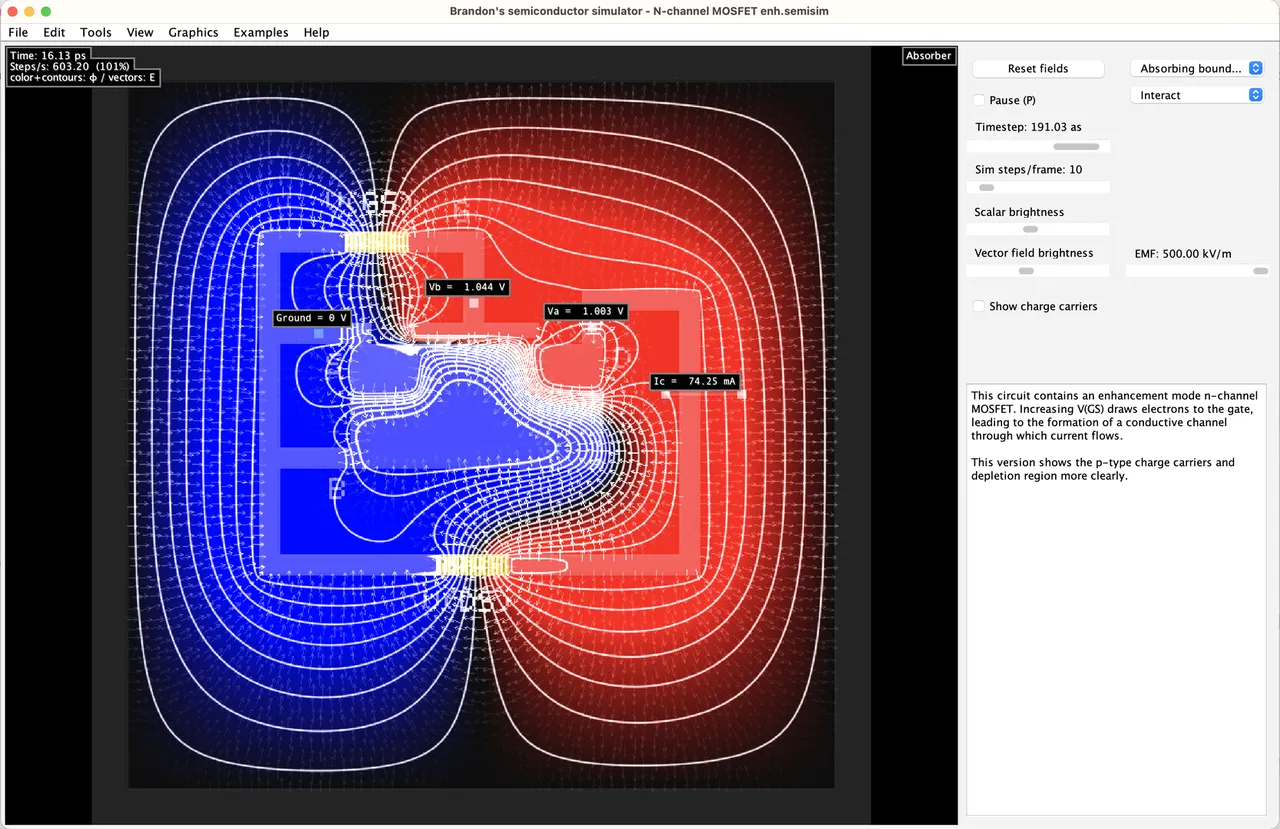
The core experience centers on a 2D grid solver that calculates Maxwell's equations alongside drift-diffusion models in real-time. Unlike standard logic gate simulators that treat components as black boxes, this simulation focuses on the granular movement of electrons and holes. By allowing users to paint materials directly onto the canvas, it enables the construction of PN junctions, MOSFETs, and JFETs from the ground up. This approach means the simulation is governed by physical laws rather than pre-programmed logic, making it a high-utility tool for students or hobbyists who want to see exactly how velocity saturation or recombination affects a specific device architecture.
Predicting the Brandon's Semiconductor Simulator Release Date
For those tracking the July 11, 2026, release date, the inclusion of Steam Workshop support is the most significant addition for long-term value. While the software ships with various pre-made demonstrations of transistors and thermoelectric effects, the ability for the community to share custom-built heterojunctions or complex semiconductor structures ensures a library of content that extends far beyond the basic tutorial files. The integration of Steam Cloud and achievements suggests a more structured user experience than a typical bare-bones academic utility.
The primary design risk lies in the complexity of its solver; balancing a Finite-Difference Time-Domain (FDTD) scheme with an interactive UI is a heavy technical lift. This is clearly intended for users who find existing educational sims too restrictive or elementary. If you are looking for a game to play for entertainment, this is likely a skip, but for anyone who has ever struggled to visualize a metal-semiconductor junction or the internal fields of a BJT, it is worth a wishlist entry. It is a niche, rigorous tool built specifically for those who value physical accuracy over gamified progression.
Features
System requirements
Minimum
- Processor
- 64 bit CPU
- Memory
- 500 MB RAM
- Storage
- 400 MB available space
Recommended
- Processor
- Intel Core i5-12600
- Memory
- 1 GB RAM
Frequently asked questions
When did Brandon's Semiconductor Simulator come out?
Brandon's Semiconductor Simulator released on July 11, 2026 for PC.
Is Brandon's Semiconductor Simulator out yet?
Yes. Brandon's Semiconductor Simulator is available now, having released on July 11, 2026.
What platforms is Brandon's Semiconductor Simulator on?
Brandon's Semiconductor Simulator is available on PC.






No comments yet. Be the first to share your thoughts.