

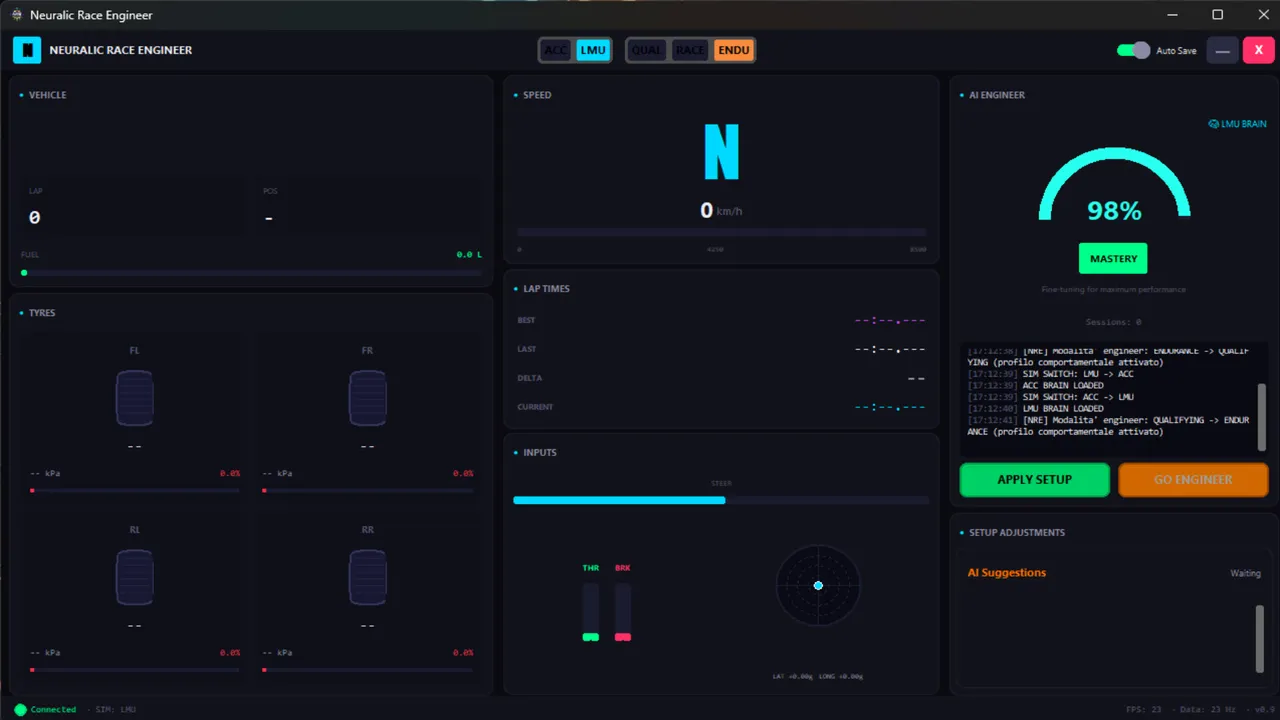
Neuralic Race Engineer
Neuralic Race Engineer is out now on PC, released on July 9, 2026.
About Neuralic Race Engineer
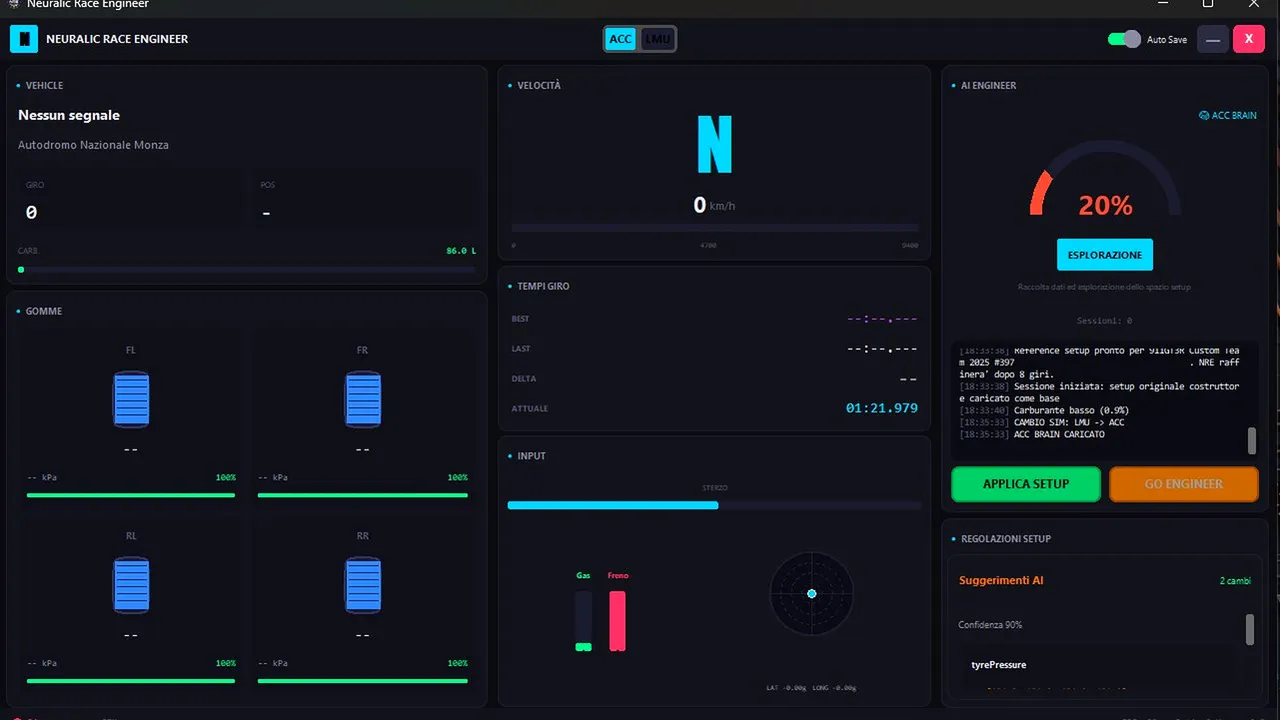
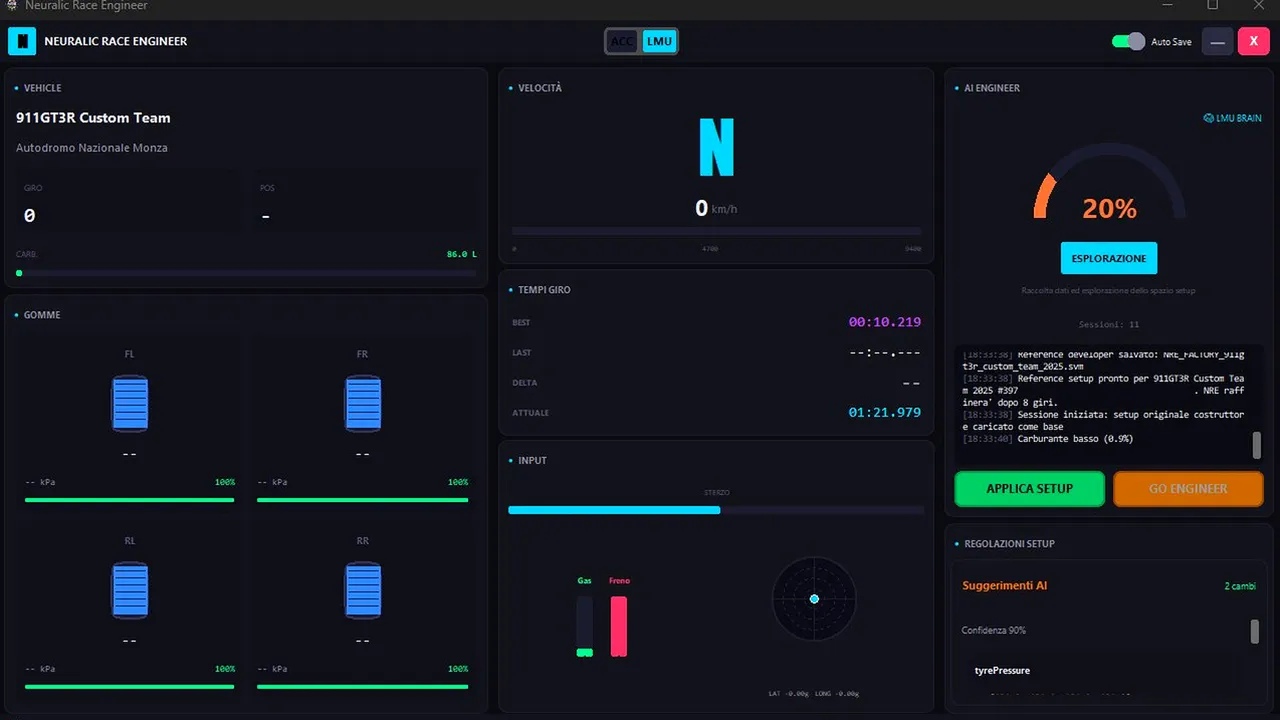
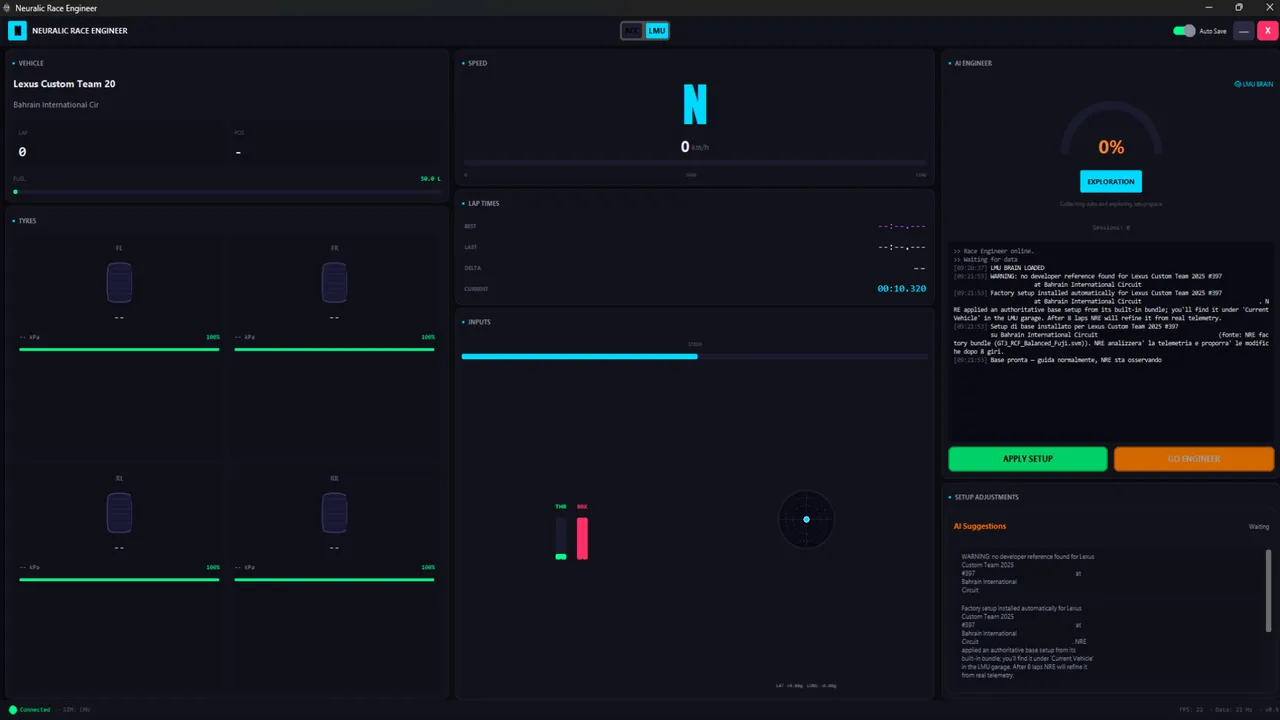
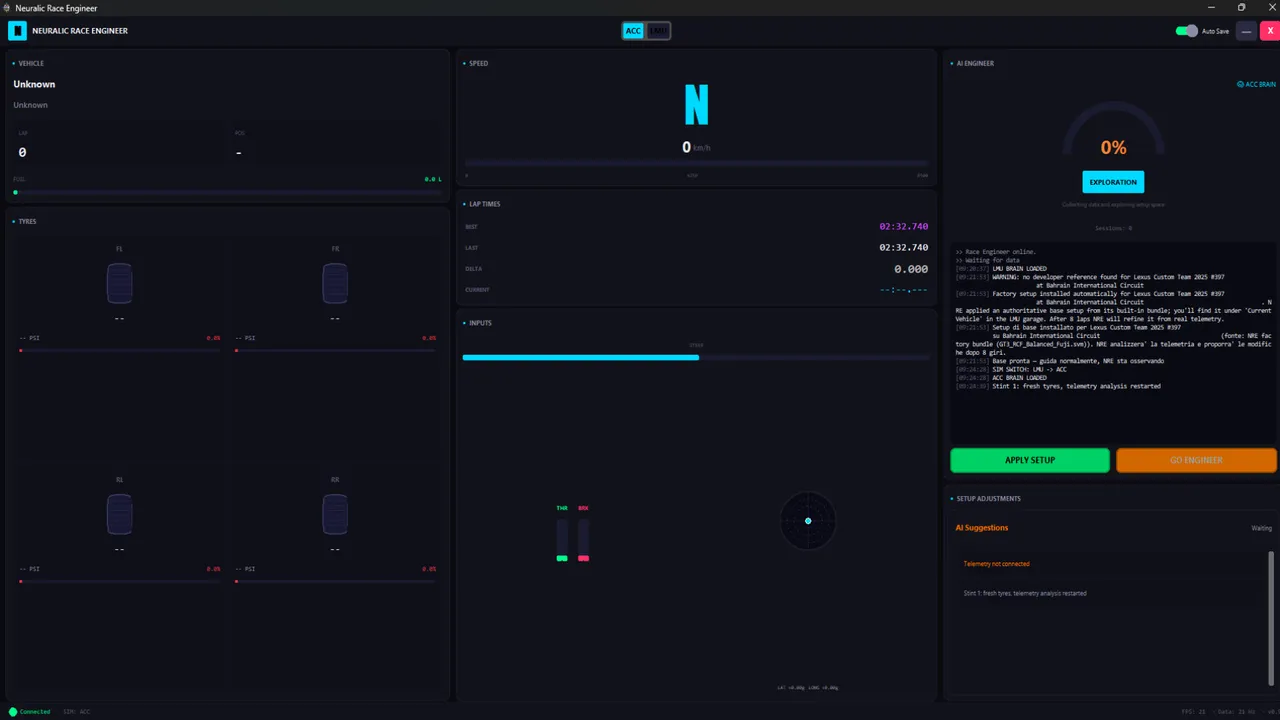
Neuralic Race Engineer shifts the burden of technical data analysis away from the player and onto an automated AI assistant. Developed and published by Synaptic Core Lab, the software acts as a persistent virtual pit wall for high-fidelity sim racing. By pulling live telemetry directly from shared memory, it attempts to solve the most daunting barrier to entry in serious simulators: the complex, often opaque world of suspension geometry and aerodynamic balance. The Neuralic Race Engineer release date is July 9, 2026, and it will be available exclusively on PC.
The application functions as a background utility rather than an in-game overlay. It is designed to observe a driver’s specific habits and the ambient track temperature to calculate optimal adjustments for tire pressures, camber, and dampers. Unlike static setup guides found on community forums, this tool writes updated setup files directly to the game directory, creating a closed-loop system where the car evolves alongside the driver's performance. For enthusiasts of Assetto Corsa Competizione (ACC) and Le Mans Ultimate (LMU), this replaces manual guesswork with a data-driven engineering cycle.
Compatibility and July 9, 2026 Release Date
At launch, Neuralic Race Engineer targets the most prominent GT and endurance racing platforms. It supports the GT3 and GT4 classes in ACC, alongside the Hypercar, LMP2, and LMGT3 tiers in LMU. The software monitors the three distinct phases of a corner—entry, mid, and exit—to diagnose whether a car is understeering or oversteering, then applies mechanical fixes to springs and anti-roll bars. This level of granularity suggests a tool built for the persistent tinkerer who lacks the engineering degree to translate a slide into a specific click of a rebound damper.
The central risk for Synaptic Core Lab lies in the "black box" nature of its recommendations; if the AI interprets a driver's mistake as a car's mechanical flaw, it could inadvertently bake bad habits into the car's setup. Whether the algorithm can accurately distinguish between a poor line and a poor spring rate is the pivotal test the software must pass. It is a specialized utility for the simulation purist who wants to focus entirely on the act of driving while delegating the spreadsheets to a digital professional. For those looking to streamline their competitive prep, this is a clear wishlist candidate ahead of its July arrival.
Features
System requirements
Minimum
- OS
- Windows 10 64-bit (build 1909 or later)
- Processor
- Intel Core i3-8100 / AMD Ryzen 3 2200G (quad-core, 3.0 GHz)
- Memory
- 4 GB RAM
- Graphics
- Integrated GPU (Intel UHD 630 / AMD Vega 8) — no 3D rendering
- DirectX
- Version 11
- Storage
- 1 GB available space
Recommended
- OS
- Windows 11 64-bit
- Processor
- Intel Core i5-10400 / AMD Ryzen 5 3600 (6 cores, 3.6 GHz) or better
- Memory
- 8 GB RAM
- Graphics
- Modern integrated or discrete GPU (not a bottleneck)
- DirectX
- Version 12
- Storage
- 2 GB available space
Frequently asked questions
When did Neuralic Race Engineer come out?
Neuralic Race Engineer released on July 9, 2026 for PC.
Is Neuralic Race Engineer out yet?
Yes. Neuralic Race Engineer is available now, having released on July 9, 2026.
What platforms is Neuralic Race Engineer on?
Neuralic Race Engineer is available on PC.






No comments yet. Be the first to share your thoughts.