
Figryne Cast Studio Engine
Figryne Cast Studio Engine is out now on PC, released on July 14, 2026.
About Figryne Cast Studio Engine
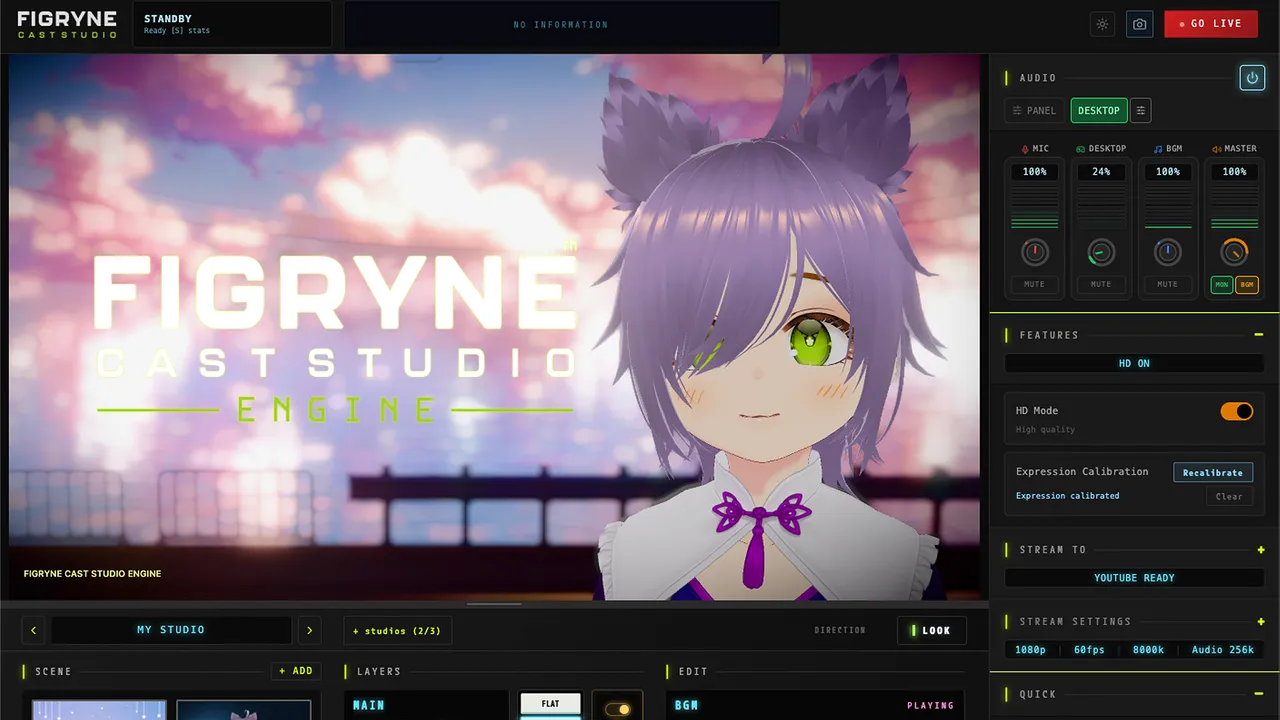
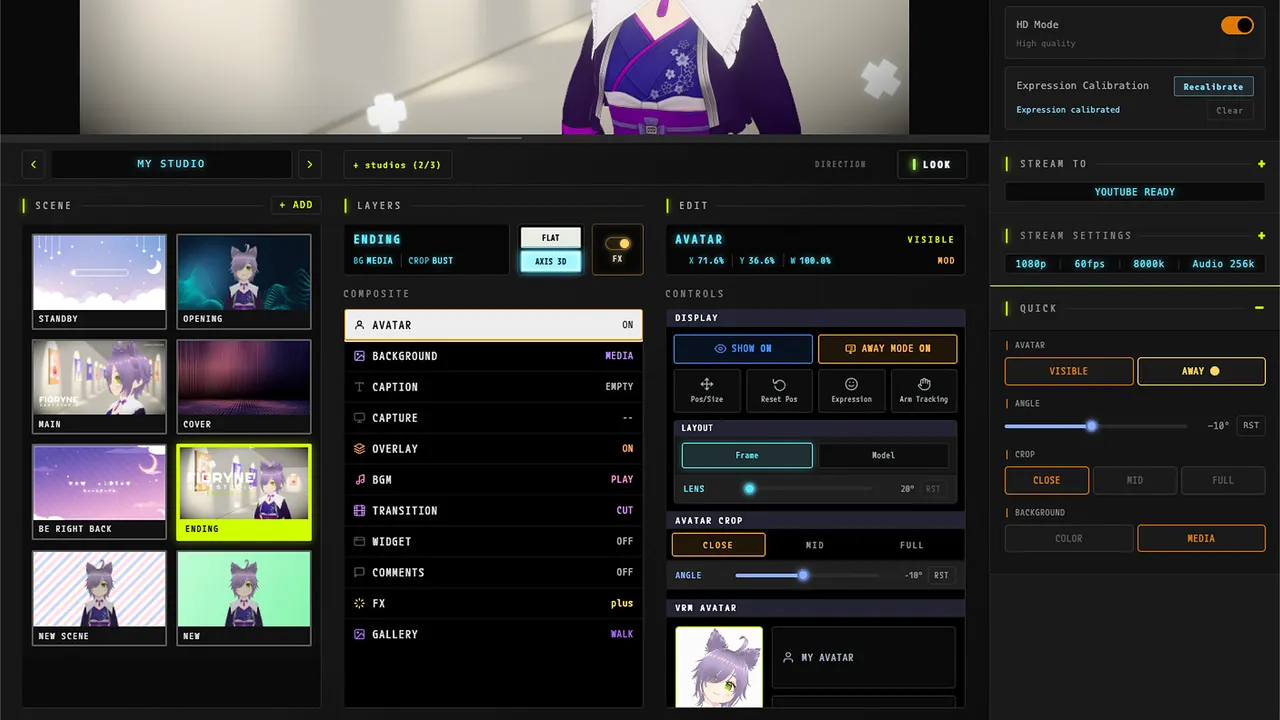
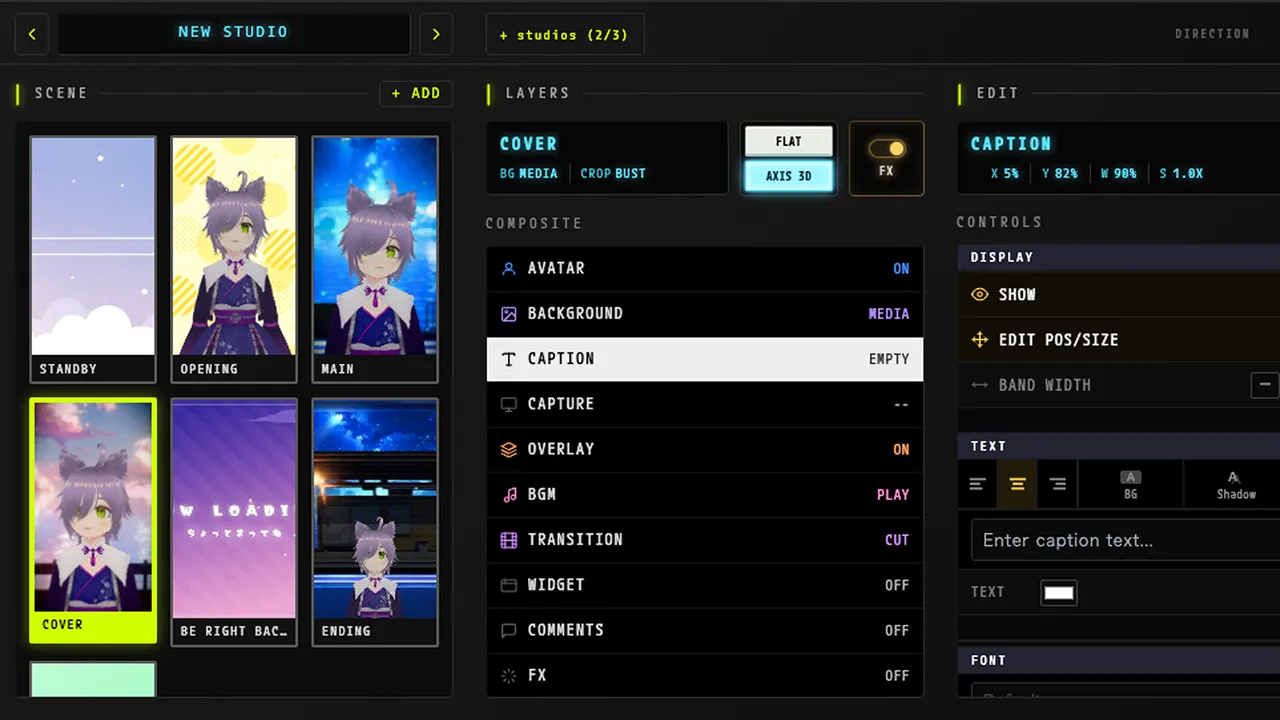
Figryne Cast Studio Engine represents a shift toward vertical integration for virtual creators, aiming to eliminate the friction of multi-app broadcasting setups. By bundling avatar tracking, scene composition, and RTMP streaming into a single environment, developer Mimizuku & co., Inc. is positioning this as a standalone alternative to the traditional OBS-plus-tracker pipeline. The Figryne Cast Studio Engine release date is July 13, 2026, when it will arrive for PC and Mac (specifically Apple Silicon) users looking to simplify their technical overhead.
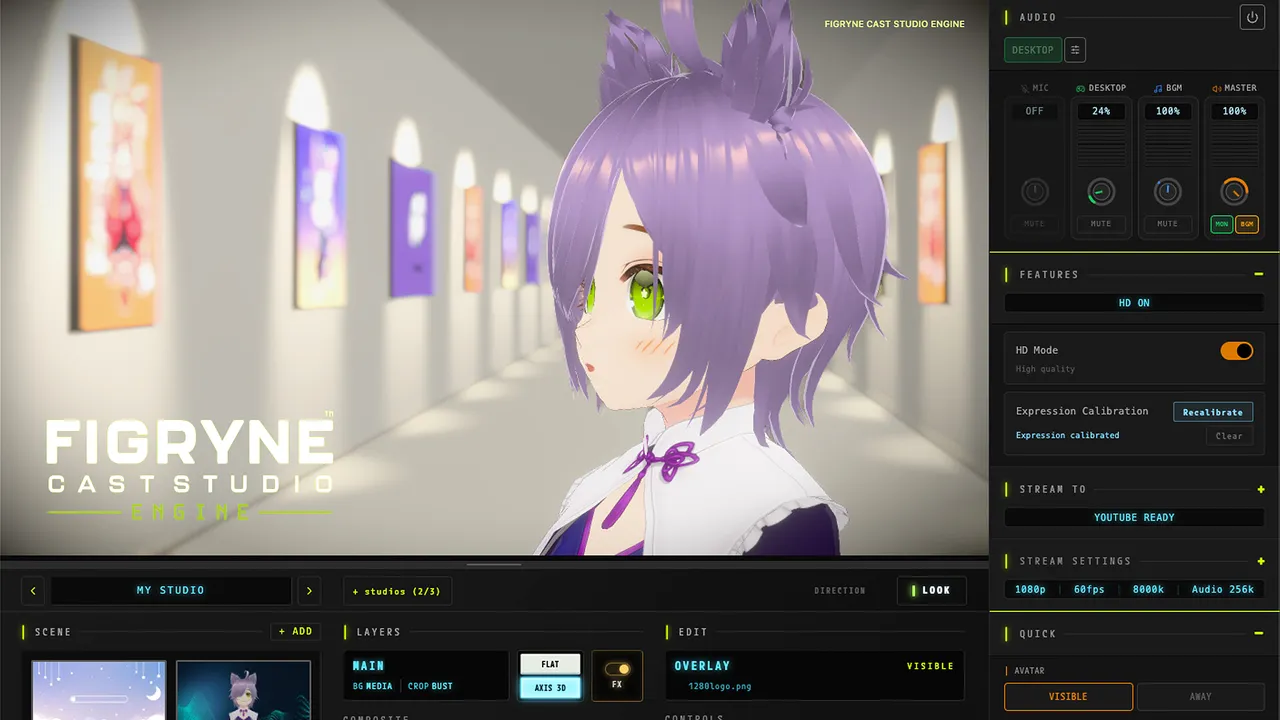
The technical hook of the software is its Axis 3D head-coupled perspective system. While most VTubing software treats the 3D avatar as a flat layer over a background, this engine uses tracking data to shift scene parallax and perspective in real time, making the character appear as though they are physically inhabiting the digital space rather than floating in front of it. It supports standard VRM models and can drive 52 blendshapes for Perfect Sync via a basic webcam, bypassing the usual requirement for specialized iPhone hardware to achieve high-fidelity facial expressions.
Figryne Cast Studio Engine Release Date and Stream Logic
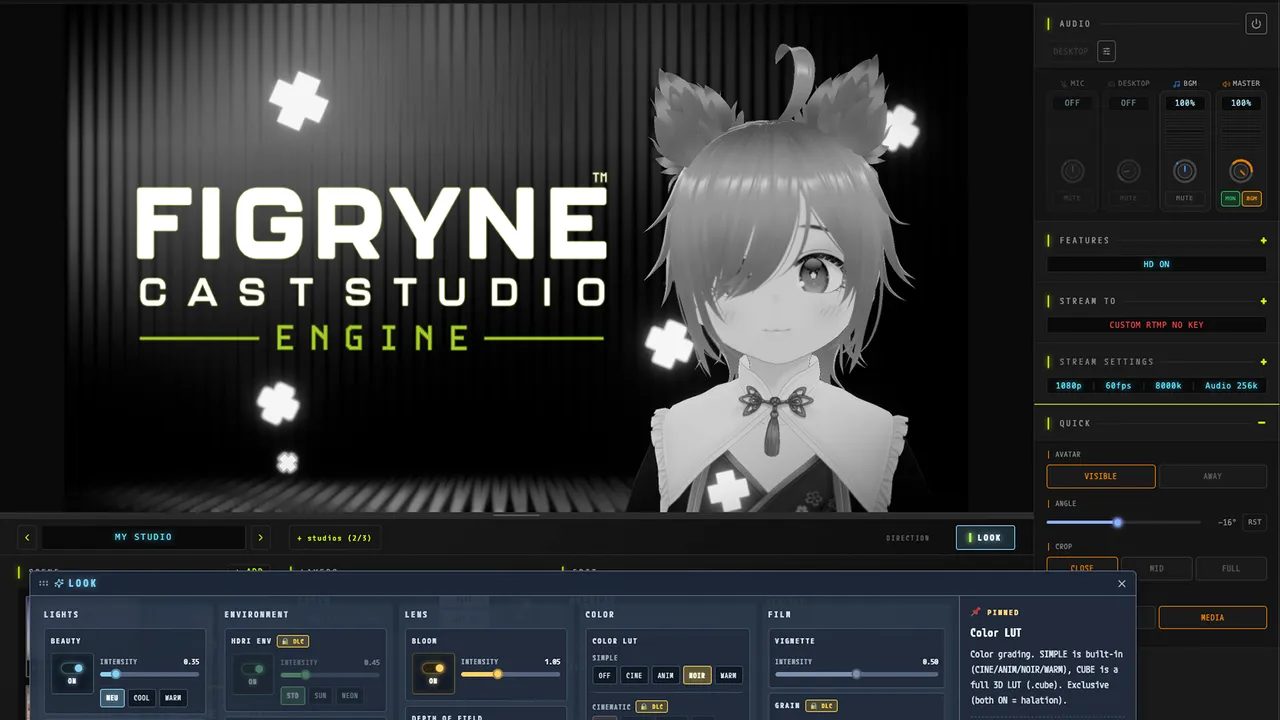
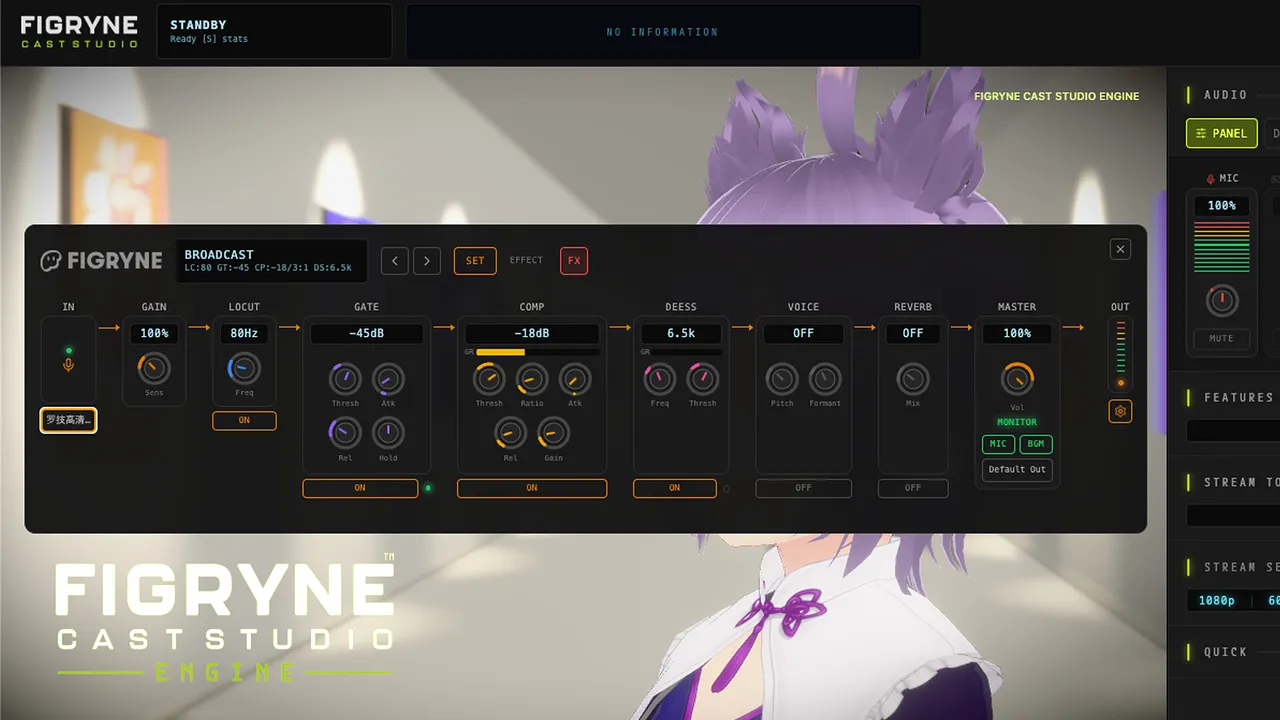
For many users, the most significant utility will be the integrated 5-channel audio mixer and the built-in post-processing stack. The inclusion of LUT color mapping, bloom, and depth of field directly within the engine allows for a unified visual style that doesn't rely on external filters or plugin management. This streamlined approach extends to the broadcast itself; the software supports direct streaming to Twitch and YouTube in both landscape and vertical 9:16 formats. Whether the single-webcam tracking can truly manage rule-based motion smoothing without the jitter common in non-IR setups is the pivotal question for professional streamers.
This tool is built for the creator who values a rapid start-up time over the infinite but often messy modularity of open-source broadcasting software. It trades the deep plugin ecosystem of OBS for a curated, cinematic workflow that keeps audio effects, voice changing, and visual transitions under one hood. If you find the current 'plugin soup' of VTubing too high a barrier to entry, this is an essential title to follow. Prospective users should wishlist the software now or test the limited 5-minute session demo to see how their specific VRM model handles the internal tracking logic before the full launch.
System requirements
Minimum
- OS
- Windows 10 64-bit / Windows 11 64-bit
- Processor
- Intel Core i5 (11th Gen or later) / AMD Ryzen 5 (6000 series or later)
- Memory
- 8 GB RAM
- Graphics
- Intel Iris Xe, Intel Arc, or AMD Radeon 660M (RDNA, integrated) or better
- DirectX
- Version 11
- Network
- Broadband Internet connection
- Storage
- 2 GB available space
- Sound Card
- Required (microphone input for VTuber tracking)
- Additional Notes
- Webcam (built-in OK) and microphone required. Lower integrated GPUs (e.g. Intel UHD, Radeon Vega 7/8) may run but with limited performance.
Recommended
- OS
- Windows 11 64-bit
- Processor
- Intel Core i7 (10th gen) or AMD Ryzen 7 (5000 series) or better
- Memory
- 16 GB RAM
- Graphics
- NVIDIA GeForce RTX 3050 / 3060 or AMD Radeon RX 6600 or better
- DirectX
- Version 12
- Network
- Broadband Internet connection
- Storage
- 2 GB available space
- Sound Card
- Required (dedicated microphone recommended)
- Additional Notes
- Discrete GPU strongly recommended for smooth real-time tracking and stream encoding (1080p60). External webcam + microphone and a wired connection recommended for stable streaming.
Frequently asked questions
When did Figryne Cast Studio Engine come out?
Figryne Cast Studio Engine released on July 14, 2026 for PC.
Is Figryne Cast Studio Engine out yet?
Yes. Figryne Cast Studio Engine is available now, having released on July 14, 2026.
What platforms is Figryne Cast Studio Engine on?
Figryne Cast Studio Engine is available on PC.






No comments yet. Be the first to share your thoughts.